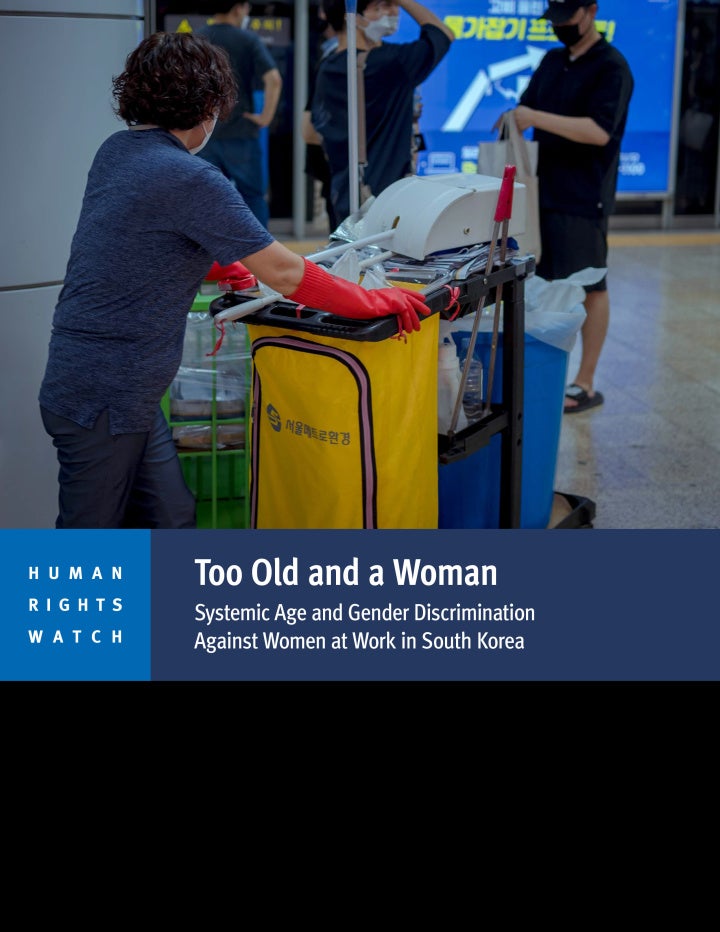
Systemic Age and Gender Discrimination Against Women at Work in South Korea
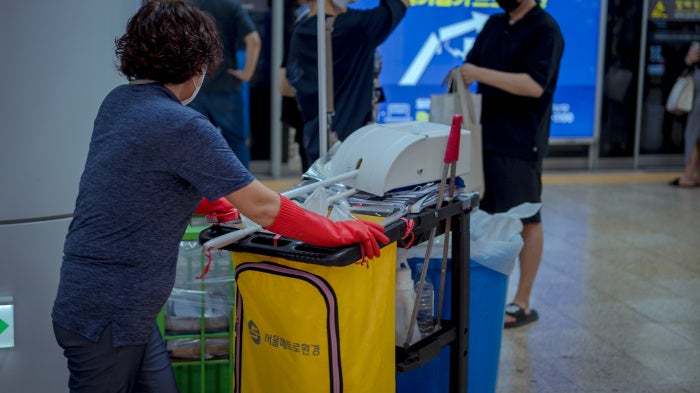
The 92-page report, “Too Old and a Woman: Systemic Age and Gender Discrimination Against Women at Work in South Korea,” documents that social attitudes toward education, unfair treatment in hiring, disrupted careers due to family responsibilities, limited promotion opportunities, glass ceilings, and sexual harassment create a disadvantage for South Korean women throughout their working lives. As women get older, their work opportunities narrow to a handful of low-paid, insecure jobs, and the gender pay gap increases. By the time they are eligible for pensions, women face a significant gender pension gap.
Maquiladoras, or export-processing factories, along the U.S.-Mexico border account for over US billion in export earnings for Mexico and employ over 500,000 workers.
China is increasingly using trade and diplomatic reprisals to silence human rights criticism, and governments around the world, when thus forced to choose between principle and profit, are putting business first. The perceived conflict between human rights and trade was perhaps best symbolized by U.S.
Throughout Pakistan employers forcibly extract labor from adults and children, restrict their freedom of movement, and deny them the right to negotiate the terms of their employment. Employers coerce such workers into servitude through physical abuse, forced confinement, and debt-bondage.
Economic and political changes in Russia have left many Russians staggering under the burdens of rising unemployment, high rates of inflation, disappearing social services and the encroaching threats of corruption and organized crime.
Forced Resettlement, Suppression of Dissent and Labor Rights Concerns
In April 1992, China’s National People’s Congress (NPC) formally approved the “Resolution on the Construction of the Yangtze River Three Gorges Project,” marking the conclusion of decades of controversy within the Chinese leadership in favor of supporters of the world’s biggest-ever river dam project.
In April 1994, tens of thousands of workers took to the streets in Medan, Indonesia, demanding higher wages, improved benefits and freedom of association. Notable for their size and anti-Chinese violence, the protests underscored the Indonesian government's urgent need to address worker's rights issues.
Even as the Indonesian government repealed a controversial decree and stated it's concern for the welfare of workers, we continued to receive reports of labor rights violations. These violations include the harassment of union members and reports of bonded labor in Irian Jaya.
Citing violations of core political rights in Mexico — freedom of expression, freedom of association, freedom of assembly, and the right to vote — this report calls for the Clinton administration to address these and other human rights issues as it engages the Mexican government in trade negotiations.
Labor Rights and Freedom of Expression in South Korea
Despite the South Korean government’s June 1987 promise of reforms, there is a wide disparity between the rhetoric of democracy achieved and the reality of the retreat from reform. The government of President Roh Tae-Woo has failed to deliver on promises of reform in two key areas: worker rights and freedom of expression.