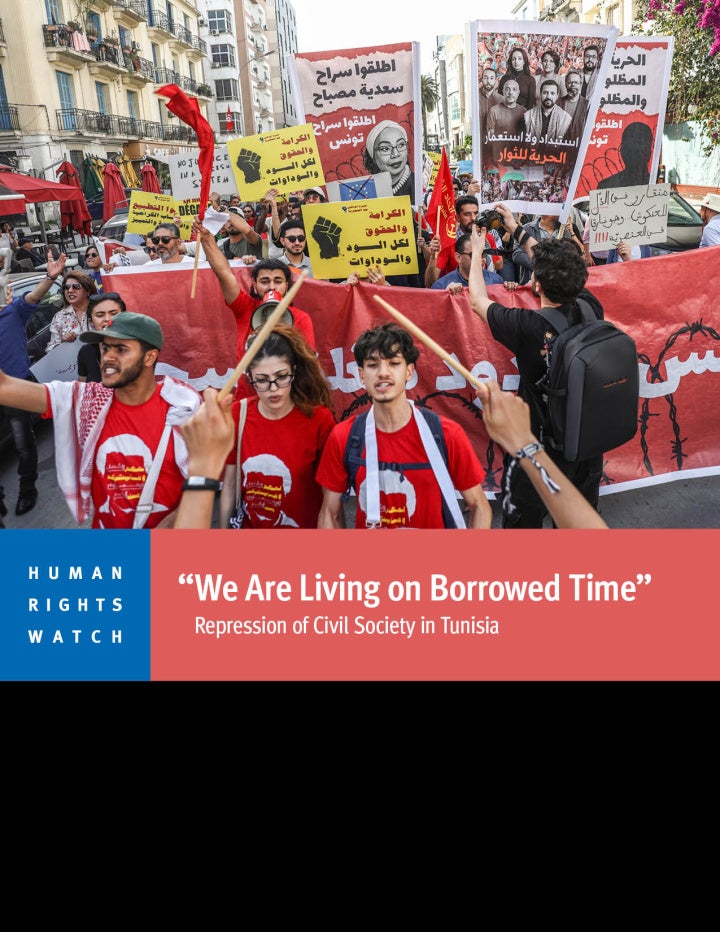
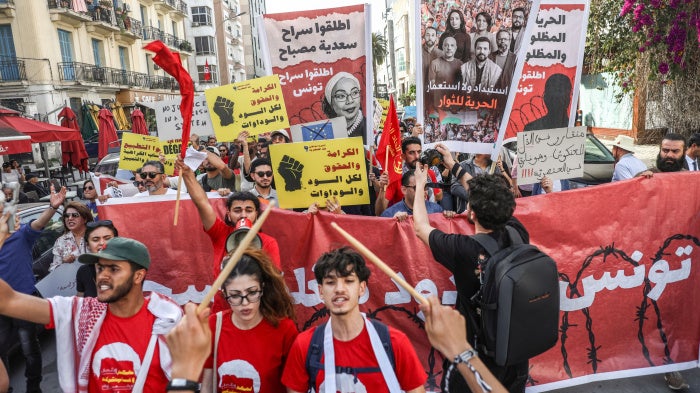
The 49-page report, “‘We Are Living on Borrowed Time’: Repression of Civil Society in Tunisia” documents the Tunisian authorities’ escalating repression of local and international civil society groups, workers, members, and affiliates through the weaponization of abusive prosecutions, arbitrary arrests, detention, financial and criminal investigations, mass suspensions, and threats of dissolution.
This 38-page report outlines the rollback of human rights and rule of law in Turkey, linked to mass anti-government protests in 2013 and corruption allegations that go to the very heart of the government of the ruling AKP.
How Large-Scale US Surveillance is Harming Journalism, Law, and American Democracy
The 120-page report documents how national security journalists and lawyers are adopting elaborate steps or otherwise modifying their practices to keep communications, sources, and other confidential information secure in light of revelations of unprecedented US government surveillance of electronic communications and transactions.
Persistent Failures of the Bahraini Justice System Since the BICI Report
The 64-page report found that more than two years after King Hamad bin Isa Al Khalifa accepted recommendations of the Bahrain Independent Commission of Inquiry (BICI) to free peaceful dissenters and hold abusive officials accountable. Bahrain’s courts play a key role in maintaining the country’s highly repressive political order, routinely sentencing peaceful protesters to long prison terms.
The 137 page report details the technologies the Ethiopian government has acquired from several countries and uses to facilitate surveillance of perceived political opponents inside the country and among the diaspora. The government’s surveillance practices violate the rights to freedom of expression, association, and access to information.
This 48-page report presents the stories of 11 prominent Saudi social and political rights activists and their struggles to resist government efforts to suppress them.
Attacks on Journalists under Yemen’s New Government
This 45-page report finds that while Yemenis generally enjoy greater freedom of expression since Hadi replaced Ali Abdullah Saleh as president in February 2012 after three decades of rule, this newfound freedom has been tempered by a rising incidence of threats and violence against the media.
Azerbaijan’s Crackdown on Civil Society and Dissent
This 100-page report documents the dramatic deterioration of the government’s record on freedom of expression, assembly, and association in the past 18 months. The authorities have arrested dozens of political activists on bogus charges, imprisoned critical journalists, broken up peaceful public demonstrations, and adopted legislation imposing new restrictions on fundamental freedoms.
Assessing the Impact of Hungary’s New Constitution and Laws
This 29-page report analyzes the new constitution and laws and their negative effects on human rights and the rule of law. It shows how the government has largely ignored criticism from the EU and the Council of Europe and, through further constitutional changes, sought to reverse binding rulings by Hungary’s Constitutional Court upholding fundamental rights.
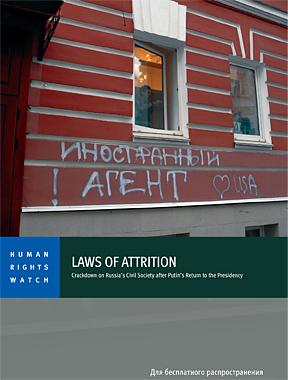
Crackdown on Russia’s Civil Society after Putin’s Return to the Presidency
This 78-page report describes some of the changes since Putin returned to the presidency in May 2012. The authorities have introduced a series of restrictive laws, begun a nationwide campaign of invasive inspections of nongovernmental organizations, harassed, intimidated, and in a number of cases imprisoned political activists, and sought to cast government critics as clandestine enemies.
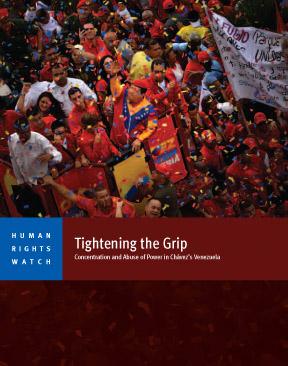
Concentration and Abuse of Power in Chávez's Venezuela
This report documents how the accumulation of power in the executive and the erosion of human rights protections have allowed the Chávez government to intimidate, censor, and prosecute critics and perceived opponents in a wide range of cases involving the judiciary, the media, and civil society.
A Briefing on Eritrea’s Missing Political Prisoners
In September 2001, President Isaias Afewerki of Eritrea ordered the detention of 21 senior government members and journalists who criticized him and his government. Since then, Isaias has closed all independent media outlets and turned Eritrea into a country where arbitrary arrest, torture, disappearance, and death are rife and where it is almost impossible to leave.
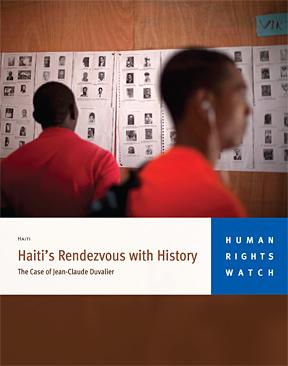
This 47-page report examines the legal and practical questions surrounding the case and concludes that Haiti has an obligation under international law to investigate and prosecute the grave violations of human rights under Duvalier's rule.
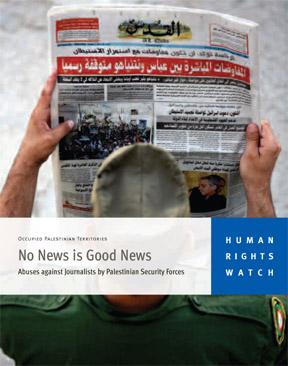
Abuses against Journalists by Palestinian Security Forces
This report documents cases in which security forces tortured, beat, and arbitrarily detained journalists, confiscated their equipment, and barred them from leaving the West Bank and Gaza.
State of Permanent Emergency Incompatible with Free and Fair Vote
This 24-page report documents the vague and subjective criteria in Egypt’s Political Parties Law that allow the government and ruling party to impede formation of new political parties.
This 69-page report documents abuses including torture, arbitrary arrests, banning of opposition activities, and harassment of civil society groups. Human Rights Watch called on the government to end the abuses and to strengthen institutional mechanisms to promote accountability by government officials and security forces.