Systemic Age and Gender Discrimination Against Women at Work in South Korea
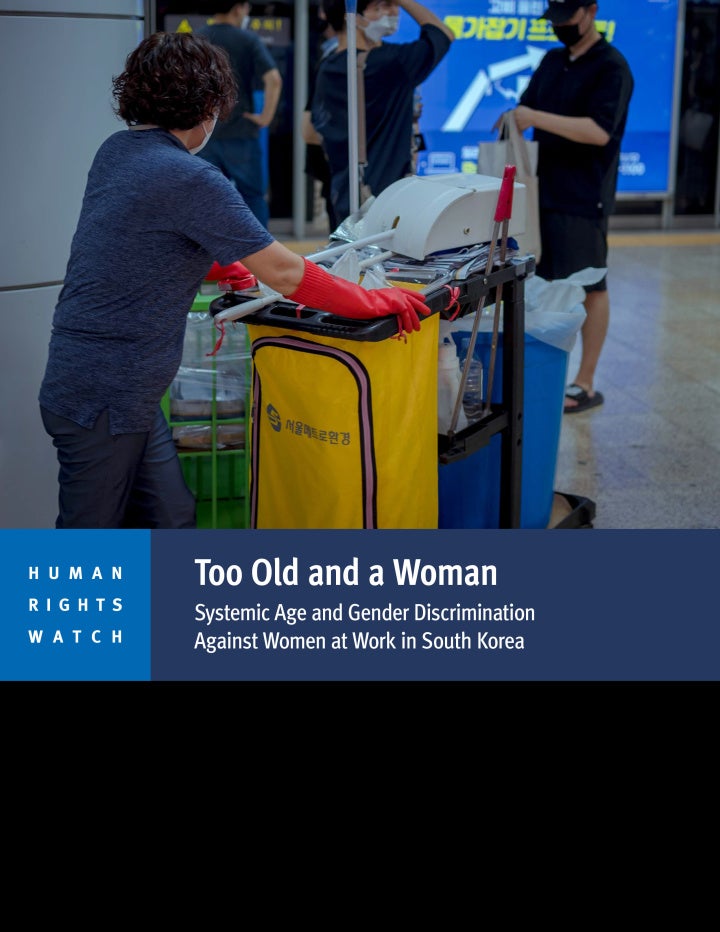
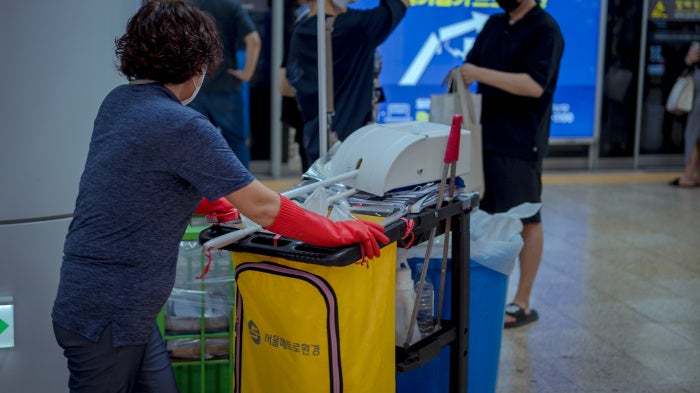
The 92-page report, “Too Old and a Woman: Systemic Age and Gender Discrimination Against Women at Work in South Korea,” documents that social attitudes toward education, unfair treatment in hiring, disrupted careers due to family responsibilities, limited promotion opportunities, glass ceilings, and sexual harassment create a disadvantage for South Korean women throughout their working lives. As women get older, their work opportunities narrow to a handful of low-paid, insecure jobs, and the gender pay gap increases. By the time they are eligible for pensions, women face a significant gender pension gap.
On September 27, 2004, the leader of a powerful armed group threatened to launch an “all-out war” in the Niger Delta - sending shock waves through the oil industry – unless the federal government ceded greater control of the region’s vast oil resources to the Ijaw people, the majority tribe in the Niger Delta.
Child domestic workers are nearly invisible among child laborers. They work alone in individual households, hidden from public scrutiny, their lives controlled by their employers. Child domestics, nearly all girls, work long hours for little or no pay. Many have no opportunity to go to school, or are forced to drop out because of the demands of their job.
Hazardous Child Labor in El Salvador’s Sugarcane Cultivation
Businesses purchasing sugar from El Salvador, including The Coca-Cola Company, are using the product of child labor that is both hazardous and widespread. Harvesting cane requires children to use machetes and other sharp knives to cut sugarcane and strip the leaves off the stalks, work they perform for up to nine hours each day in the hot sun.
On February 20, 2004, President George W. Bush notified Congress of his intent to sign the U.S.-Central America Free Trade Agreement (CAFTA)-an accord that the United States recently negotiated with Costa Rica, El Salvador, Guatemala, Honduras, and Nicaragua. According to U.S.
The Use of Oil Revenue in Angola and Its Impact on Human Rights
More than four billion dollars in state oil revenue disappeared from Angolan government coffers from 1997-2002, roughly equal to the entire sum the government spent on all social programs in the same period. Meanwhile, although the 27-year civil war ended in 2002, an estimated 900,000 Angolans are still internally displaced. Millions more have virtually no access to hospitals or schools.
This 29-page report documents how violence in Nigeria’s southern Delta State this year, especially during the state and federal elections in April and May, resulted in hundreds of deaths, the displacement of thousands of people, and the destruction of hundreds of homes. Among the dead were probably dozens killed by the government security forces.
In January 2003, U.S.-Central America Free Trade Agreement (CAFTA) negotiations began among the United States, Costa Rica, El Salvador, Guatemala, Honduras, and Nicaragua. The final negotiating round is scheduled for early December 2003. CAFTA presents an important opportunity to raise labor standards throughout Central America.
Human Rights Abuse and Indonesia's Pulp and Paper Industry
Indonesian police and company security forces are responsible for persistent human rights abuses against indigenous communities involved in the massive pulp and paper industry in Sumatra, Human Rights Watch said in a new report released today. Abuses include land seizures without compensation and brutal attacks on local demonstrators.
Free trade alone cannot ensure greater respect for workers' rights nor prevent millions of people from being excluded from the benefits of globalization. Human Rights Watch believes that measures to protect workers' rights should be built into trade agreements to ensure that globalization does not come at the expense of human rights.
When a civilian government was reinstated in Nigeria in 1999, many of those living in the Niger Delta region, the source of Nigeria's oil wealth, hoped that a "democratic dividend" would end decades of neglect they had suffered under successive military regimes.
The Chinese government's refusal to allow independent trade unions is fueling worker protests, Human Rights Watch said in this new report.The 50-page report, "Paying the Price: Worker Unrest in Northeast China," analyzes in detail the demonstrations that took place from March through May 2002 in three cities in northeastern China, and the government response to them.
In investigations in Egypt, Ecuador, India, and the United States, Human Rights Watch has found that the children working in agriculture are endangered and exploited on a daily basis. Human Rights Watch found that despite the vast differences among these four countries, many of the risks and abuses faced by child agricultural workers were strikingly similar.
Child Labor and Obstacles to Organizing on Ecuador's Banana Plantations
Banana workers in Ecuador are the victims of serious human rights abuses, Human Rights Watch charged in a new report released today. In its investigation, Human Rights Watch found that Ecuadorian children as young as eight work on banana plantations in hazardous conditions, while adult workers fear firing if they try to exercise their right to organize.
Women in Guatemala's largest female-dominated labor sectors face persistent sex discrimination and abuse, Human Rights Watch charges in this report. The 147-page report examines two sectors, export processing and private households, which employ tens of thousands of women sewing clothes for sale in the United States and working as live-in domestic workers.
In this briefing paper, Human Rights Watch builds on the U.N. experts’ report to examine the manner in which the Liberia arms embargo has been systematically breached to furnish weapons to gross human rights abusers. Much attention has been given in the past to the subject of individual arms traffickers and the transport networks they use to illegally deliver weapons to abusive end users.