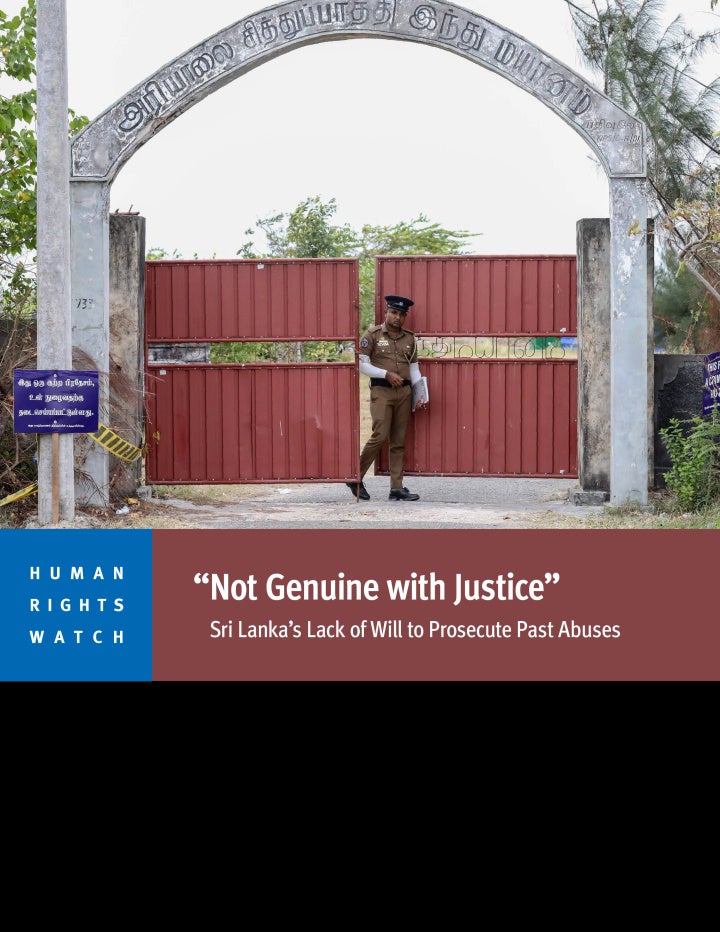
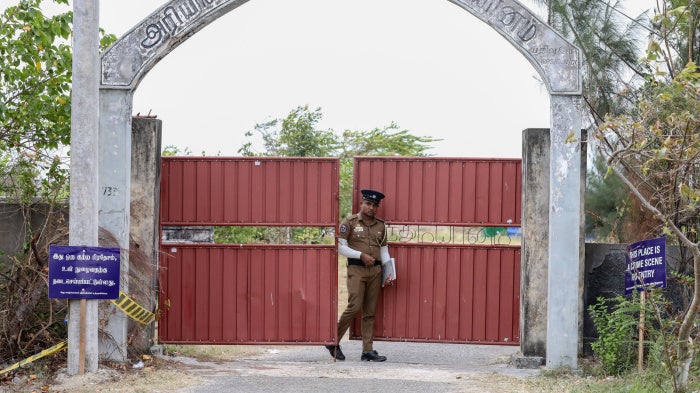
The 49-page report, “‘Not Genuine with Justice’: Sri Lanka’s Lack of Will to Prosecute Past Abuses,” provides an overview of domestic justice efforts in seven prominent cases of grave abuses in which the Dissanayake government has made a measure of progress since taking office in 2024. Human Rights Watch found that many emblematic cases, including a massacre of aid workers, the targeting of journalists, and enforced disappearances of academics and others, remain stalled, while families of victims and human rights defenders face threats and intimidation.
China’s Interference in United Nations Human Rights Mechanisms
This report details China’s efforts to harass independent activists, primarily those from China. Chinese officials have photographed and filmed activists on UN premises in violation of UN rules, and restricted travel by mainland activists to the UN Human Rights Council in Geneva. China has also used its membership on the Economic and Social Council’s Committee on Non-Governmental Organizations (NGOs) to block NGOs critical of China from being granted UN accreditation, and it has sought – and succeeded in – blacklisting accredited activists from participating in UN events.
Curing the Selectivity Syndrome examines the successes and failures of the Human Rights Council to date, and finds significant gaps in the performance of its mandate. Human Rights Watch calls on the Council to engage on all human rights situations that need its attention and to overcome selectivity in its work.
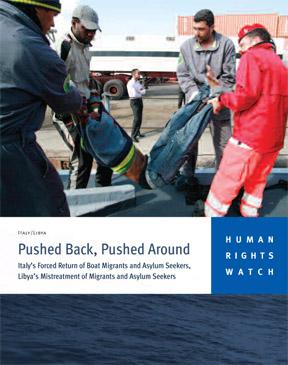
Italy's Forced Return of Boat Migrants and Asylum Seekers, Libya's Mistreatment of Migrants and Asylum Seekers
This 92-page report examines the treatment of migrants, asylum seekers, and refugees in Libya through the eyes of those who have managed to leave and are now in Italy and Malta. It also documents Italy's practice of interdicting boats full of migrants on the high seas and pushing them back to Libya without the required screening.
This 44-page report documents the most pressing human rights challenges facing the SPLM-led Government of Southern Sudan. The problems include an inability to protect civilians effectively from armed attacks and violence, a failure to address abuses by security forces, and a weak justice system.
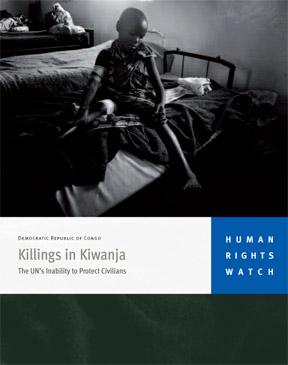
The 30-page report details the killing of an estimated 150 people in the town of Kiwanja on November 4 and 5, 2008 - the worst killing spree in North Kivu province in two years. Although UN peacekeepers considered Kiwanja a priority protection zone, they did not have enough peacekeepers or the capacity to stop the killings.
This memorandum identifies seven of the most pressing human rights concerns in Kosovo today. To help identify the key concerns, Human Rights Watch consulted human rights groups across Kosovo’s different ethnic communities
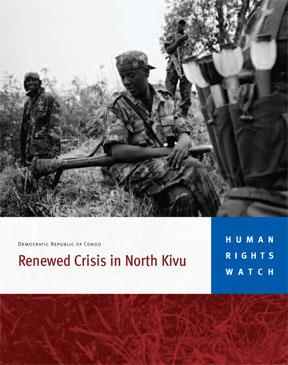
<table cellpadding="3" cellspacing="0"><tr><td><img src="http://www.hrw.org/images/home/2007/100/congo17143.jpg" align="left" border="0" /></td> <td valign="top">This 86-page report details crimes against civilians by Congolese army soldiers, troops of renegade general Laurent Nkunda, and combatants of a Rwandan opposition force called the Forces for the Liberation of Rwanda (FDLR).The report docum</td></tr></table>
Indicators for Evaluating Progress in the HRC Group of Experts Process
On September 24, 2007, the Human Rights Council will consider an interim report by the Group of Experts (GOE) appointed on Darfur. The GOE compiled existing recommendations on Darfur in its June report, and has been working with the government of Sudan to foster their implementation.
As it enters its second year, the Council must take hold of the many situations that “require the HRC’s attention,” and take action of some sort to address them. The HRC’s efforts to address these situations will provide an important indication of its ability to fulfil the purpose for which it was created.
Analysis of Belarus’ Assertions on its Suitability for UN Rights Council Membership
General Assembly resolution 60/251 requires that states “take into account the contribution of candidates to the promotion and protection of human rights and their voluntary pledges and commitments made thereto” in voting to elect members of the Human Rights Council (HRC).
In this first year of its existence, the Council is understandably preoccupied with institution building. But human rights violations haven’t been suspended while the Council focused on these tasks; in fact they have worsened in many locations. The Council’s attention to institution building has created a growing backlog of work that deserves the HRC’s attention.
The task of the intergovernmental working group on review of mandates is wide-ranging and important. In this paper, Human Rights Watch identifies the six key points that should help guide the working group's review.
An Analysis of the Uzbek Government’s June 30, 2006 Aide-Memoire
In this 16-page briefing paper, Human Rights Watch analyzes an Uzbek government memorandum from June 2006, which was prepared in response to a December 2005 UN General Assembly resolution that was critical of Uzbekistan’s human rights record.
New Approaches to Addressing Human Rights Situations
The new Human Rights Council (“HRC” or “Council”) was created in order to strengthen protection for the victims of human rights violations worldwide. The Council’s ability to succeed in that mission will depend on the development of a more effective approach to consideration of human rights situations in particular countries.