18 September 2026
Excellencies,
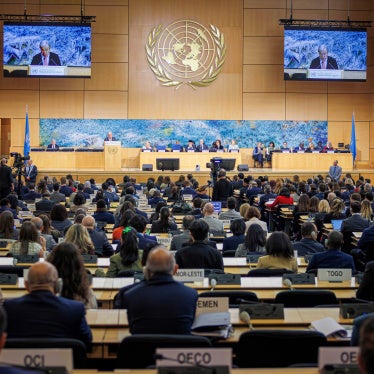
In the context of the 63rd session of the United Nations Human Rights Council (HRC), we, the undersigned organizations, appeal to all delegations to support the full renewal of the mandate of the Special Rapporteur on Afghanistan, and to ensure continued dedicated reporting and related Enhanced Interactive Dialogue focused on the rights of women and girls, to request an additional dedicated report on the situation of ethnic, religious, linguistically marginalized groups/communities followed by an interactive dialogue on their situation. The resolution should also call for the swift operationalisation of the Independent Investigative Mechanism for Afghanistan (IIMA), established by the landmark HRC resolution 60/2, adopted by consensus in October 2025.
As grave human rights violations remain pervasive in Afghanistan, amid a context of extreme repression, gender persecution, and a situation the Special Rapporteur has described as “gender apartheid,” continued scrutiny and engagement by the Human Rights Council remains essential.
During the Special Rapporteur’s interactive dialogue of 7 and 8 September 2026, states expressed their condemnation of the human rights situation in Afghanistan, with many delegations asking what more they could do to respond to this dire situation. This letter sets out concrete steps the Council and Member States can take in response to that question.
Five years since the Taliban’s return to power, the human rights situation in Afghanistan continues to deteriorate rather than stabilize. The de facto authorities have entrenched their rule through an ever-expanding architecture of decrees, directives and formal codes that strips away fundamental freedoms and institutionalises impunity. Arbitrary arrest, incommunicado and prolonged detention, torture and other ill-treatment, and enforced disappearances continue to be used against journalists, human rights defenders, former government officials, protesters and anyone perceived as critical of Taliban rule, including former security personnel targeted under a continuing, and largely unaddressed, pattern of reprisals. Corporal punishments, including floggings, and executions, are being carried out following the Taliban leadership’s order for enforcement of its interpretation of Sharia (Islamic law), often after proceedings that fall far short of fair trial and due process guarantees. Linguistic, religious and ethnic minorities, including Hazaras, Ismaili Shia, along with other marginalised communities, including persons with disabilities and LGBTQI+ individuals, continue to face discrimination and targeted violence. The Taliban’s new Law on Preachers, published in 2026, entrenches a single interpretation of Islam as the only permissible basis for religious teaching, codifying religious intolerance and further tightening ideological control over public and private life. A new Criminal Procedure Code, enacted at the start of 2026, likewise raises serious concerns for due process and equality before the law, including provisions that risk formalising discrimination and torture and other ill treatment.
Afghanistan remains in the grip of an acute and worsening humanitarian and economic crisis, compounded by the large-scale, often forced, return of Afghan refugees and migrants not only from the neighbouring countries Iran and Pakistan but also by the continued deportation of Afghans from Türkiye and European countries, frequently without adequate safeguards, screening for protection needs, or regard for the risks awaiting returnees, including women, officials from previous Afghan governments and others associated with prior foreign forces’ presence in Afghanistan, LGBTQI+ individuals, members of persecuted minorities, and human rights defenders.
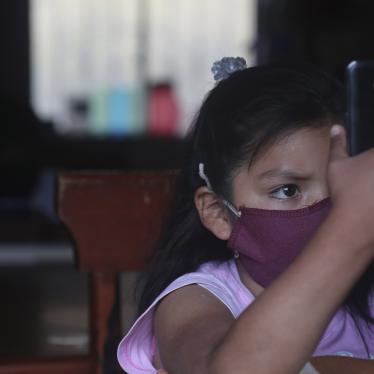
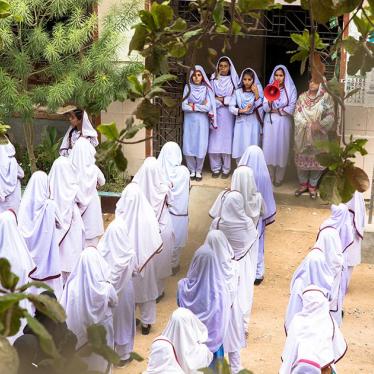
The situation of women and girls remains the starkest illustration of the Taliban’s system of institutionalised discrimination, one that the Special Rapporteur and other UN experts have characterised as amounting to gender persecution and “gender apartheid.” Girls remain barred from secondary school and university, and women continue to be excluded from most paid employment, public office and public life more broadly, including restrictions on movement, dress and access to parks, gyms and other public spaces. In 2026, the Taliban issued further decrees that deepen this system of control by stripping women of legal equality with men and narrowing the circumstances in which domestic violence can be prosecuted, as well as amending laws governing judicial separation of spouses to remove any reference to a minimum age of marriage, entrench a male guardianship system, and make it dramatically more difficult for women and girls to leave forced or abusive marriages while preserving men’s unilateral right to divorce. Taken together with the many decrees issued since 2021 that specifically target women and girls, these measures reflect a deliberate, escalating and increasingly codified project to erase women and girls from public life and strip them of legal person-hood.
Amid the escalating the human rights and humanitarian crisis under the Taliban, escalating cross-border hostilities between the Taliban and Pakistan have resulted in numerous civilian deaths and injuries. Civilian objects, including healthcare facilities, have been struck by airstrikes or cross-border shelling from Pakistan. Respect for international humanitarian law needs to be fully implemented, and alleged violations require thorough, impartial, and independent investigations to ensure that those responsible are held to account.
Continued, dedicated international scrutiny of this situation is essential to guide and inform international engagement with the Taliban, and protection and accountability measures, particularly as indication of normalisation begins including through growing diplomatic and economic engagement with the Taliban, including negotiations amid at facilitating the forced returns of Afghan nationals.
The mandate of the Special Rapporteur on Afghanistan is vital for ensuring continued monitoring and reporting on these alarming developments. Its analysis and recommendations provide a road-map for international engagement with a view to protecting rights and advancing accountability. It has played an essential role in engaging on individual cases, including arbitrary detention and cases of reprisal. The specific focus the mandate has brought to grave violations of the rights of women and girls, through dedicated additional reporting, is a lifeline that needs to continue, so as to avoid any indication of normalisation of widespread gender persecution and what the Special Rapporteur has described as “gender apartheid.” Additionally, its rigorous documentation and analysis can serve as a vital source of evidence and reporting for international accountability mechanisms, for instance, supporting the ongoing investigation by the International Criminal Court (ICC), as well as informing potential proceedings before the International Court of Justice (ICJ) regarding Afghanistan's obligations under the Convention on the Elimination of All Forms of Discrimination against Women (CEDAW).
The additional, enhanced interactive dialogue on the rights of women and girls, which has included the direct participation of Afghan women, remains a vital space to ensure their active participation in the discussion of policy measures to protect their rights and advance accountability for widespread gender persecution, and should be maintained.
As the Taliban continue efforts to silence and erase women and girls and women human rights defenders in Afghanistan, it is essential that the international community works to elevate their voices, support their work, and centre them in all discussions about their own rights and Afghanistan’s future. The usual enhanced interactive dialogue on Afghanistan is one key tool in this regard and should be retained. Afghan women, including women human rights defenders and women inside the country, need to remain central and active participants in every discussion of Afghanistan’s future, including at the Human Rights Council, rather than subjects spoken about in their absence.
In October 2025, the Human Rights Council adopted landmark resolution 60/2, in response to continued appeals of civil society, to create an Independent Investigative Mechanism for Afghanistan (IIMA) as a tool for advancing accountability for past and ongoing rights violations and abuses in Afghanistan. That resolution, adopted by consensus, affirmed that “delivering justice and redress to victims, and accountability to perpetrators, of gross human rights violations and abuses and serious violations of international humanitarian law through all available processes is an essential pillar needed for long-term sustainable peace, development and reconciliation in Afghanistan,” and that accountability should be pursued “through processes that are comprehensive, multidimensional, gender-responsive and victim-centred,” applying a comprehensive approach to transitional justice and bringing perpetrators to justice, guided by the principles elaborated by the Office of the High Commissioner for Human Rights (OHCHR) in its 2024 stocktaking report (A/HRC/57/22). One year on, the Human Rights Council should recall that landmark decision, and call for its full operationalisation without further delay. The Human Rights Council and Member States must remain engaged in this regard, including through regular updates on the mechanism’s operationalisation and funding.
In light of the above, we call on states at the 63rd session of the UN Human Rights Council to work together to adopt a resolution that:
1. Highlights the near-total erosion of human rights in Afghanistan under the Taliban
- The resolution should express grave concern over the further deepening of repression in Afghanistan, and spotlight key concerns including the Taliban’s systematic repression of women and girls; arbitrary detention, enforced disappearance, torture and other ill-treatment of human rights defenders, journalists, protesters and perceived critics; the dire humanitarian crisis; and forced returns of Afghan refugees and migrants at the risk of persecution and ill-treatment.
- The text should also address alarming new developments, including the new Criminal Procedure Code, the Law on Preachers, and the decree on judicial separation of spouses, which eliminates minimum-age protections against the marriage of girls.
2. Fully renews the mandate of the Special Rapporteur on Afghanistan, and ensures regular reporting, including continued dedicated reporting on the rights of women and girls and a related enhanced interactive dialogue inclusive of Afghan women, and ensures a dedicated report on the situation of ethnic, religious, linguistically marginalized groups/communities followed by an interactive dialogue on their situation.
- In addition to the Special Rapporteur’s annual comprehensive report and related interactive dialogues at the Human Rights Council and the UN General Assembly, it is vital to maintain the dedicated report on grave ongoing violations of the rights of women and girls (which amount to gender persecution, and which the Special Rapporteur has described as “gender apartheid”), as well as the dedicated reporting, and the enhanced interactive dialogue on the rights of women and girls during which that report is presented, which allows for the participation of Afghan women in HRC discussions;
- The HRC should also request a dedicated report on the situation of ethnic, religious, linguistically marginalized groups/communities followed by an interactive dialogue on their situation.
- The resolution should ensure the Special Rapporteur has the resources he needs to carry out his mandate effectively, including for engagement on individual cases and country visits or equivalent access.
- The HRC should also take action to meaningfully follow up on the recommendations of the Special Rapporteur, including through dedicated tracking of implementation by relevant actors.
3. Reaffirms the need for a comprehensive approach to accountability and recalls the creation of the IIMA
- The resolution should retain the important and carefully negotiated language of the HRC60 resolution on the “urgent and imperative need to ensure accountability,” with reference to the principles set out in the OHCHR stocktaking report (A/HRC/57/22) that such processes be “comprehensive, multidimensional, gender-responsive and victim-centred.”
- It should recall the creation of the Independent Investigative Mechanism for Afghanistan (IIMA) and calls for its expeditious, full operationalisation and adequate, sustained resourcing, along with other underfunded accountability mandates established by the Human Rights Council.
- It should recall support for the International Criminal Court.
- It should reiterate its encouragement to the IIMA to integrate a gender perspective and a children’s rights perspective, and to ensure an intersectional, victim- and survivor-centred approach throughout its work, in line with the mandate set out in HRC resolution 60/2, including through meaningful and safe engagement with victims, survivors and their representatives, and with Afghan and international civil society.
- It should request an update on the operationalisation of the IIMA to be presented at the 64th session of the HRC in the context of an enhanced interactive dialogue with the participation of the Special Rapporteur and the OHCHR.
We thank you for your attention to this urgent matter and stand ready to provide any further information that may be useful to your delegation’s consideration of this resolution.
- Supported by: National Organisations
- Human Rights Defenders Plus -HRD+
- Civil Society and Human Rights Network – CSHRN
- Afghanistan Development and Democracy Organization - ADDO
- YAAR e.V.
- Window for Hope
- Afghan Women Coordination Umbrella
- Hami -Women Empowerment Organization
- Dialogue Hub for Common Ground
- EU HOPE - European Organisation for Equality and Progress
- Rights Monitor Media
- Women’s Justice movement
- Woman’s Rights First
- Rainbow Afghanistan
- Afghans For A Better Tomorrow
- Women Beyond Borders
- Afghanistan human Rights and Democracy Organisation -AHRDO
- GoPS
- HWPSDO
- Together for Equality Organization
- New Generation Network for change
- Afghanistan United Women’s Movement for Freedom
- Women and Children Legal Research Foundation - WCLRC
- Unity and Solidarity of Afghanistan Women - USAW
- European Organization for Integration e.V.
- Powerful Women’s Movement in Afghanistan
- WFCI
- Afghan Women Activists Coordinating Body - AWACB
- Rawadari
- Women’s Movement for Peace and Freedom
- Women s Motion network
- Afghanistan Women’s Solidarity Movement
- Afghan Women's Political Participation Network
- Afghanistan Women’s New Future movement
- Afghanistan Womens Light of Freedom Movement
- Freedom Movement of women
- Feminine Solidarity for Justice Organization
- AWA Foundation
- Development and Support of Afghan Women and Children Organization
- Afghan Youth in New Era Organization
- Equality Social and Cultural Organization
- Panjshir Civil Society Organizations Network
- Afghanistan Women’s New Future Movement
- Nationals Movement Against Discrimination
- Civil Society and Human Rights Activists Network
- Independent Cooperation for Change Organization
- Peace and Sport Organization
- Afghanistan Community Foundation
- Youth and Childern Development Program
- Paikan TV
- Radio Nehad Network
- Tolo Social and Civic Organization
- Afghan Human Rights Defenders in Exile
- Alternative Links for Training and Development
- Afghanistan Cinema House
- Afghanistan Diaspora and In-country Activists Nexus Group
- Partnership for Dialogue and Development Organization
- Ertebat Organization
- Assembly of Scientists and Experts of Afghanistan
- Mawoud Academy
- Shahrvand Social and Legal Research Organization
- Hera Citizens Social Association
- Forward Together Development Network
- Women’s Yell Movement for Equality
- Freedom Struggle Network
- New Generation Network for Change
- Independent Coalition of Afghanistan Women’s Protest Movement
- Afghanistan’s Powerful Women’s Movement
- Farkhunda Movement
- Balkh Women’s Movement
- Free People Movement in Exile
- Global Campaign Against Gender Apartheid
- Tolo-e-Azadi
- Afghanistan Service, Cultural and Rehabilitation Organization
- Afghanistan Women’s Political Participation Network
- Tabesam Cultural and Social Services Institute
- Free Watch Afghanistan Organization
- IAWRT Afghanistan
- Afghan Women Journalist Union
- International Association of Women in Radio and Television, Afghanistan Chapter
- Gita Research & Action Institute
- No to Rigor Organization
- Borderless Amu Movement
- Stichting Voor Afghanistan
- Afghan Women Education and Vocational Services Organization
- Wahaj Welfare Organization for Afghanistan
- Incident Prevention and Assist the People Organization
- Digital Civil Society Institute- Azady
- Accountability Watch Afghanistan – AWA
- Afghanistan Diaspora and In‑country Activists Nexus Group
Supported by: International Organisations
- Center for Human Rights Advocacy
- World Organisation aganist Torture - OMCT
- Asian Forum for Human Rights and Development - FORUM-ASIA
- Human Rights Activists Union
- Human Rights Watch – HRW
- Amnesty International – AI
- Arendt Chambers