(Nairobi) – Niger’s junta has provisionally stripped five more exiled opposition figures of their nationality, extending a controversial policy increasingly used against critics of the military authorities, Human Rights Watch said today.
On September 17, 2026, Gen. Abdourahamane Tiani, who has led Niger’s junta since the July 2023 coup, signed a decree removing the nationality of five prominent Nigeriens living in exile. The decree derives authority from a 2024 order creating a national terrorism database with overbroad inclusion criteria and inadequate due process requirements and safeguards for redress. The order jeopardizes privacy and data protection rights and increases the risk of statelessness.
“The Niger junta’s use of a terrorism database to deprive people of their nationality without any meaningful legal safeguards raises serious human rights concerns,” said Ilaria Allegrozzi, senior Sahel researcher at Human Rights Watch. “Nationality is a fundamental legal status, not a privilege that governments can take from people for political reasons.”
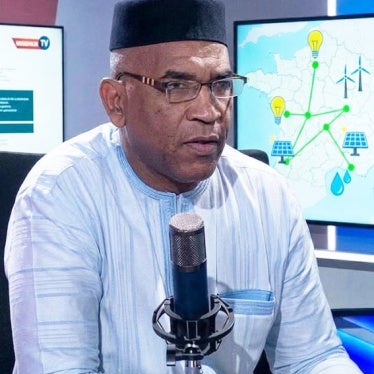
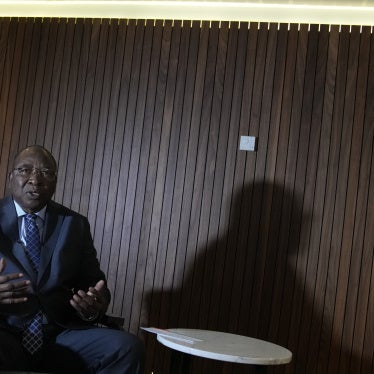
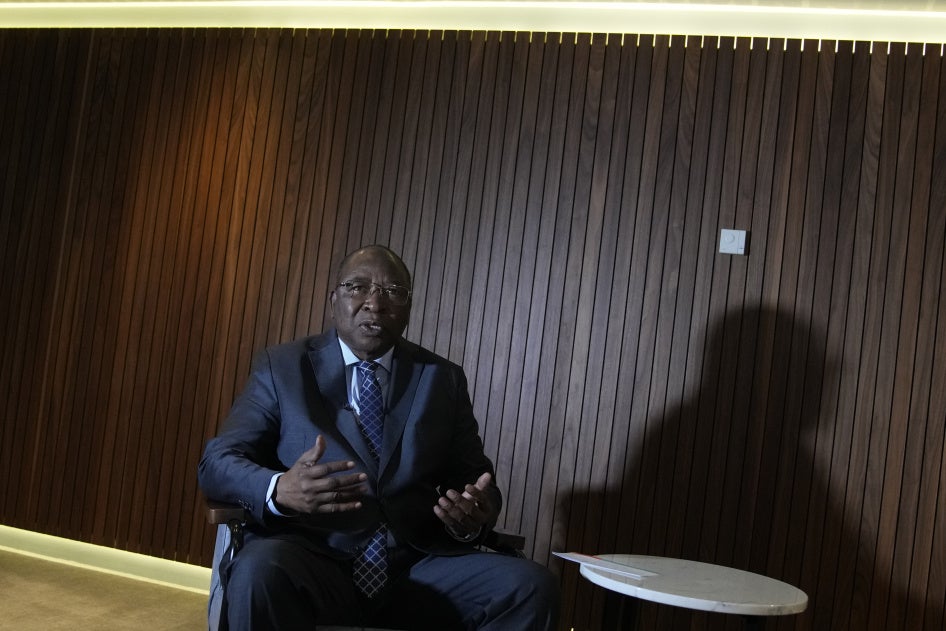
The five affected are former Prime Minister Ouhoumoudou Mahamadou; Amadou dit Ange Barou Chekaraou, Oumarou Moussa Ibrahim, and Ousmane Abdoul Moumouni, all former advisers to President Mohamed Bazoum, who was ousted in 2023 and remains arbitrarily detained; and Boubacar Seyni Souley, a social media activist critical of the junta.
The September 17 decree accuses the men of various offenses, including disseminating information capable of disturbing public order, providing intelligence to foreign powers, electronic defamation, demoralizing the armed forces, and threatening state security.
The decree raises questions about compliance with Niger’s existing legal framework. The 1984 Nationality Code does not provide for “provisional loss” of nationality. Where deprivation of nationality is permitted, the law requires the authorities to notify the person concerned and give them one month to submit a written defense before the measure is published in the official journal.
“Nothing of the sort is happening here,” the Alliance of Sahel Democrats, a coalition of Nigerien, Malian, and Burkinabè diaspora political opposition groups advocating a return to constitutional rule, said in a statement on September 18. The alliance also noted that the September 17 decree is depriving individuals of their nationality while they are still being prosecuted, in contravention of the 2024 order, which states that deprivation of nationality can only be imposed after a conviction.
According to Niger’s press agency, the junta’s latest action brings the number of people provisionally deprived of Nigerien nationality under the 2024 order to 25. In October 2024, the junta provisionally stripped nine people linked to former President Bazoum of their nationality. In June, authorities revoked the citizenship of Mariama Djibrine, an opposition figure living in exile.
In a September 19 statement, the G25-Niger, an opposition coalition of civil society groups and media organizations formed in 2025, said the 2024 order “is being used as a tool of political repression … to crack down on opponents and other dissenting voices.”
Since taking power in 2023, Niger’s military junta has entrenched authoritarian rule and consolidated sweeping and unchecked powers, systematically weakening institutions capable of holding the military authorities to account.
In the past year alone, the military authorities have dissolved all political parties and several independent unions, suspended dozens of civil society groups, detained journalists under a broad cybercrime law, criminalized consensual same-sex relations, announced Niger’s withdrawal from the International Criminal Court, and prolonged the country’s political transition without any roadmap toward democratic elections. In addition to Bazoum, the junta continues to arbitrarily detain Moussa Tchangari, a prominent human rights defender.
The authorities have also taken steps to curb criticism from abroad. In June, Niger’s foreign affairs minister instructed diplomatic missions to monitor online criticism of the military authorities, signaling growing scrutiny of the diaspora’s discussions of the country’s political and human rights situation.
The political climate in Niger has become increasingly tense in recent weeks, Human Rights Watch said. On August 28, mutinous soldiers attacked a military base at the international airport in Niamey, Niger’s capital, and the presidential palace, with hours of gunfire. The mutineers also briefly seized the headquarters of the state-run national television, disrupting broadcasts. General Tiani called in Russia’s government-controlled Africa Corps, whose intervention, including the use of armed drones, helped loyalist forces suppress the mutiny.
Niger is a party to the United Nations Convention on the Reduction of Statelessness, which restricts states from depriving people of their nationality when doing so would leave them stateless. Colleagues of the five affected by the September 17 decree said that at least four of them only possess a Nigerien passport.
Those who are without a nationality as well as their families risk being deprived of legal and social protection abroad. It could prevent them from returning to Niger, which is their right under international human rights law.
“The Niger junta has been depriving perceived political opponents of their nationality without meaningful due process, and contrary to Niger’s obligations to prevent statelessness and protect fundamental rights,” Allegrozzi said. “The junta should immediately revoke the decree and suspend the use of the easily abused terrorism database.”